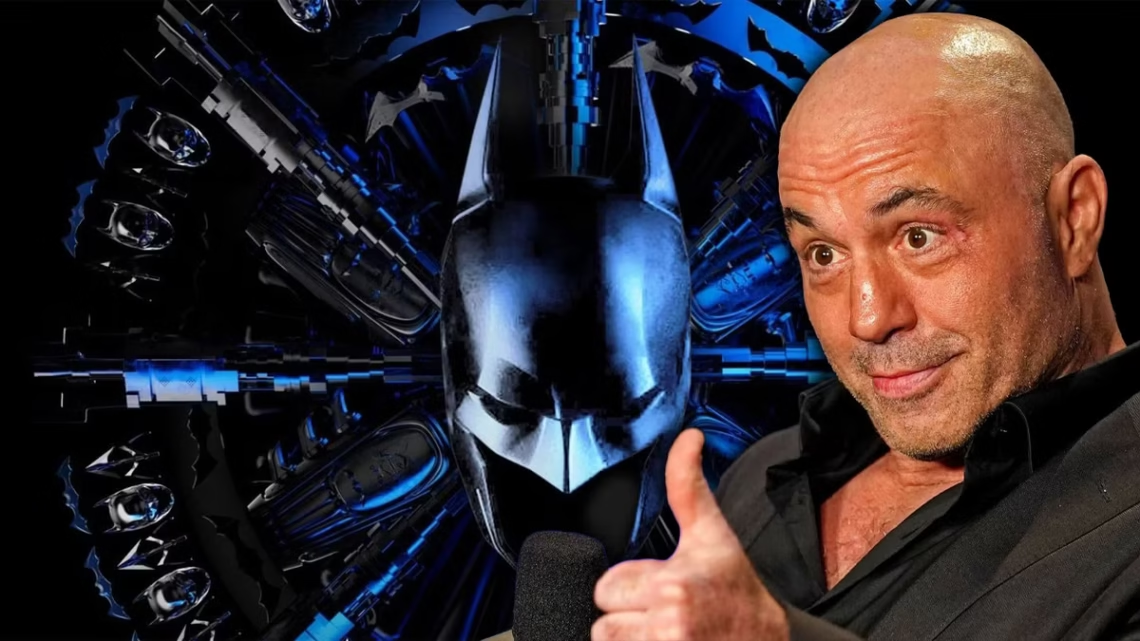
Introduction to batman unburied
When most people think of Batman, they picture comic panels, blockbuster films, or gritty TV adaptations. Very few imagine closing their eyes and experiencing Gotham City purely through sound. Yet Batman Unburied managed to do exactly that. Instead of relying on visuals, it leaned into audio storytelling and delivered one of the most immersive Batman experiences in years. At first glance, the idea of an audio-only superhero drama might sound risky, but the result turned out to be surprisingly powerful.
What makes Batman Unburied fascinating is that it doesn’t simply retell a familiar origin story. It reframes Batman entirely. Rather than focusing on gadgets, fight choreography, or cinematic spectacle, it drills deep into psychology. The show asks uncomfortable questions about Bruce Wayne’s mind, trauma, and fractured identity. In many ways, it feels less like a superhero adventure and more like a psychological crime thriller.
The series was released as a scripted podcast, which might seem like a niche format. However, podcasts have grown into serious storytelling platforms, capable of matching television in emotional depth and narrative complexity. Batman Unburied uses that format to its advantage, creating tension through sound design, voice acting, and pacing rather than flashy visuals.
In this article, we’ll break down what makes Batman Unburied special. From its storytelling style and characters to its themes and cultural impact, we’ll explore why this audio drama stands out as one of the most inventive Batman adaptations in recent memory.
The Concept Behind Batman Unburied
The idea of placing Batman into an audio drama batman unburied might sound unconventional, but it actually aligns well with the character’s roots. Batman has always been about shadows, whispers, and unseen threats. Strip away the visuals, and what remains is fear, suspense, and atmosphere. Audio storytelling enhances all of those elements. Every footstep, breath, and creaking door becomes meaningful.
Instead of following Bruce Wayne as the already-established vigilante, Batman Unburied begins with something far more intriguing: Bruce wakes up with memory gaps. He works as a forensic pathologist in Gotham City, examining bodies in the morgue. Right away, the series plays with the audience’s expectations. Is this an alternate timeline? A psychological breakdown? Something else entirely? That mystery hooks you immediately.
This setup cleverly grounds the story in detective work rather than superhero theatrics. Bruce analyzes evidence, studies crime scenes, and questions suspects. It feels closer to a crime procedural than a traditional comic book plot. Yet, that grounded approach highlights something longtime fans sometimes forget: Batman is supposed to be the world’s greatest detective.
By focusing on the mind rather than the mask, the creators make Gotham feel more intimate and unsettling. The concept transforms Batman from an untouchable legend into a vulnerable human being struggling to piece together his own reality. That vulnerability makes the stakes feel far more personal than most big-screen versions ever manage.
Storytelling Style and Narrative Structure
One of the strongest aspects of Batman Unburied is how it structures its narrative. Instead of linear storytelling, the plot unfolds in fragments. Memories surface slowly. Clues don’t line up neatly. Listeners are forced to assemble the puzzle alongside Bruce. This technique creates a constant sense of unease, which fits perfectly with the tone.
The show leans heavily into psychological thriller territory. You’re never quite sure whether what you’re hearing is real or a manifestation of Bruce’s mind. That ambiguity is intentional. The writers blur the line between external threats and internal trauma, keeping you guessing about what’s actually happening. It’s a bold choice, but it pays off.
Because the series is audio-only, the pacing becomes incredibly important. Dialogue carries the weight of the narrative. Conversations feel tight and purposeful, with very little filler. Every exchange either builds tension or reveals something new. There’s an efficiency to the writing that keeps the story moving without feeling rushed.
At the same time, the show isn’t afraid of silence. Strategic pauses, distant echoes, and subtle background sounds create an atmosphere that’s sometimes more intense than any spoken line. Those quiet moments let your imagination fill in the blanks, and often what you imagine is scarier than anything you could see on screen.
Bruce Wayne’s Psychological Depth
Perhaps the most compelling element of Batman Unburied is its portrayal of Bruce Wayne. Instead of treating him as a near-mythical hero, the series presents him as fragile, confused, and deeply scarred. This version of Bruce feels human in a way that many adaptations overlook.
Working as a forensic pathologist, he literally spends his days surrounded by death. That setting isn’t accidental. It mirrors his internal state. Bruce has always been defined by loss, and the morgue becomes a symbolic extension of his trauma. Every case he handles seems to echo his own unresolved pain. It’s heavy, but it’s also thematically rich.
The show also explores dissociation and identity. Bruce struggles with gaps in memory, and the question of whether Batman is an alter ego or a coping mechanism hangs over everything. Is Batman something he chooses to be, or something his mind created to survive? The series doesn’t offer easy answers, which makes the journey more compelling.
By focusing on Bruce’s mental health, Batman Unburied transforms the character into something more relatable. He’s not just a billionaire vigilante with endless gadgets. He’s a man wrestling with grief, guilt, and fear. That emotional grounding makes every threat feel real, because you’re not just worried about Batman losing a fight—you’re worried about Bruce losing himself.
Iconic Characters Reimagined
A Batman story is only as strong as its supporting cast, and Batman Unburied does an impressive job reinterpreting familiar characters. Instead of simply copying comic book versions, the series adapts them to fit its grounded, psychological tone.
Take Barbara Gordon, for example. She isn’t just a sidekick or tech expert. She’s presented as a capable investigator and emotional anchor for Bruce. Their relationship feels mature and layered, built on trust rather than flashy teamwork. She challenges him, questions him, and refuses to blindly follow his lead.
The villain, the Harvester, is particularly unsettling. Rather than a theatrical mastermind, he’s more like a serial killer pulled from a true-crime podcast. His crimes are methodical and disturbing, which adds a level of realism that’s genuinely chilling. You don’t feel like you’re listening to a comic book villain—you feel like you’re listening to something that could actually exist.
Other familiar names appear as well, but always with slight twists that keep things fresh. This willingness to experiment prevents the story from feeling predictable. Even longtime fans can’t rely on their expectations, which makes every reveal more impactful.
Sound Design and Voice Acting Excellence
If Batman Unburied proves anything, it’s that sound alone can build an entire world. The sound design is meticulous. You can practically hear Gotham breathing. Rain hits pavement, doors creak open, distant sirens wail in the background. These details create a vivid mental image without ever showing a single frame.
The use of spatial audio is particularly effective. Sounds move around you, making scenes feel immersive and three-dimensional. When someone whispers behind Bruce or footsteps approach from the side, you instinctively react. It’s a clever trick that pulls you deeper into the story and makes everything feel immediate.
Voice acting also carries enormous weight, and the cast delivers. Bruce’s voice captures exhaustion, determination, and confusion all at once. You can hear the cracks in his composure. That vulnerability sells the emotional stakes better than any visual performance could. Supporting actors bring equal depth, giving each character a distinct personality.
Together, sound design and voice acting transform what could have been a simple podcast into something cinematic. It’s proof that you don’t need visuals to create a blockbuster experience—you just need thoughtful craftsmanship.
Cultural Impact and the Future of Audio Superhero Stories
Beyond its own narrative, Batman Unburied represents something bigger: a shift in how superhero stories can be told. For years, the genre has been dominated by massive budgets and visual effects. This series shows that intimacy and creativity can be just as powerful. Sometimes less really is more.
The success of the show opened the door for other audio adaptations. Suddenly, studios began taking podcasts more seriously as storytelling platforms. Audio dramas aren’t just side projects anymore—they’re legitimate ways to expand major franchises. That’s a significant change for the industry.
For fans, this format also offers something refreshing. You can listen anywhere—while commuting, exercising, or relaxing at home. It’s a more personal experience than sitting in a crowded theater. The story feels like it’s happening inside your head, which makes it strangely immersive.
Ultimately, Batman Unburied proves that Batman doesn’t belong to just one medium. He works just as well in shadows and soundscapes as he does on the big screen. And if this series is any indication, the future of superhero storytelling might be a lot more diverse—and a lot more interesting—than we ever expected.
Conclusion:
At its core, Batman Unburied isn’t just another Batman story. It’s an experiment that actually works. By prioritizing psychology, mystery, and atmosphere over spectacle, it delivers something fresh while still honoring the essence of the character. That balance is incredibly hard to achieve.
The show respects longtime fans but doesn’t rely on nostalgia. Instead, it challenges assumptions and explores new angles. Bruce Wayne becomes more human. Gotham feels more grounded. The threats feel more real. Everything is stripped down to the essentials, and somehow that makes it more powerful.
What lingers after finishing the series isn’t a big action scene or flashy moment. It’s the emotional weight. It’s the feeling of walking through a dark city with only your thoughts for company. That’s the kind of experience only audio storytelling can deliver.
If you’re a Batman fan—or simply someone who appreciates smart, character-driven thrillers—Batman Unburied is absolutely worth your time. It’s proof that even after decades of adaptations, the Dark Knight can still surprise us when creators are willing to take bold risks.