Introduction to geometry arrow
Geometry can feel abstract at first. Lines stretch forever, angles open endlessly, and shapes seem to float on a page without context. But introduce one simple symbol — the arrow — and suddenly everything gains direction, movement, and purpose. The geometry arrow is one of those deceptively small tools that quietly holds together huge parts of mathematics, physics, design, engineering, and even computer graphics.
At a glance, an arrow might just look like a line with a pointed tip. Yet in geometry, it can represent direction, vectors, rays, transformations, forces, mappings, and logical flow. It guides how we read diagrams, interpret proofs, and understand space itself. Without arrows, much of modern math notation would feel clumsy or incomplete.
In this deep dive, we’ll explore the geometry arrow from every angle — literally and figuratively. We’ll look at how it functions in basic Euclidean geometry, how it evolves into vectors, how it supports advanced fields like linear algebra and physics, and why it remains such a powerful visual communication tool. The tone here is casual and approachable, but the explanations will be thorough and expert-level, so you walk away with real clarity rather than surface knowledge.
Let’s break it down step by step.
What Is a Geometry Arrow, Really?
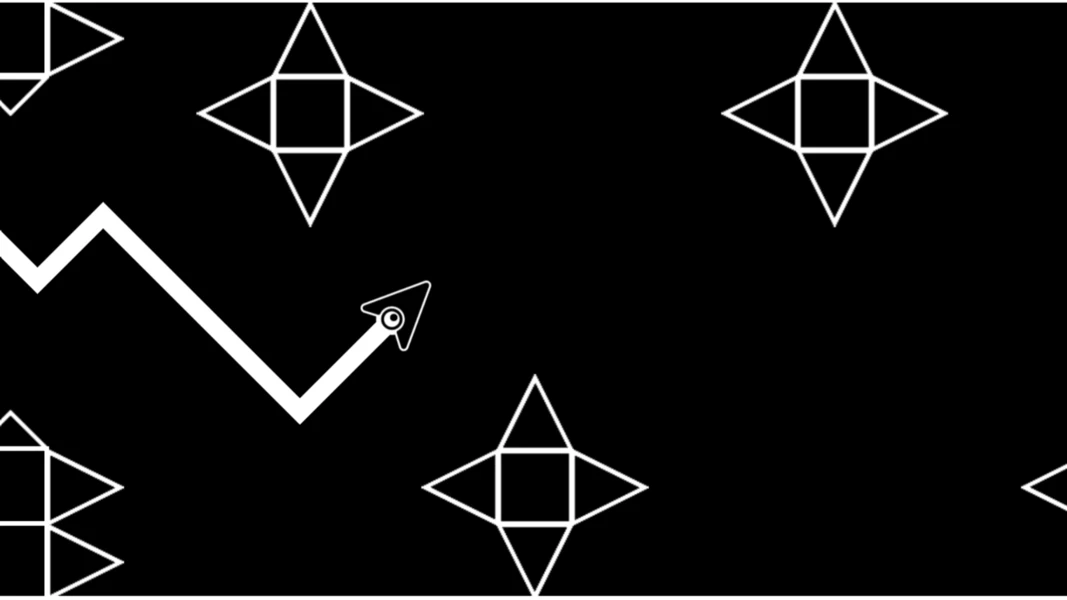
At its most basic, a geometry arrow is a straight line segment with a pointed end that indicates direction. That’s the textbook answer. But that description barely scratches the surface of what it actually communicates.
In diagrams, arrows do more than point. They establish relationships. They show where something begins and where it goes. A line alone is ambiguous; it extends infinitely in both directions. A ray has a starting point but no clear sense of emphasis. An arrow clarifies intention. It says, “Start here, go this way.” That simple instruction carries enormous meaning in geometry.
Think of how you naturally read an arrow. Your eye follows the tail to the tip. That motion mimics movement through space. Geometry uses this instinct to convey mathematical information visually. Instead of lengthy explanations, a quick arrow can express direction, flow, or change instantly.
Over time, mathematicians realized arrows could represent much more than simple pointing. They began using them symbolically — to describe vectors, transformations, functions, and logical implications. What started as a drawing tool became a language.
Arrows in Basic Euclidean Geometry
When students first encounter geometry, arrows usually appear in the form of rays and directed line segments. These are foundational ideas, geometry arrow yet they introduce the critical concept of direction.
A ray starts at one fixed point and extends infinitely in one direction. To show this visually, we draw a line with an arrow at one end. That arrow communicates something precise: the line does not stop. It continues forever. Without the arrow, the meaning would be unclear.
Directed segments use arrows differently. Instead of infinity, they emphasize orientation. Suppose you draw segment AB. Adding an arrow from A to B distinguishes it from B to A. The two segments occupy the same space but represent different directions. In geometry, that difference matters, especially when measuring displacement or describing movement.
Even angle diagrams often rely on arrows. Rotational arrows indicate the direction in which an angle opens — clockwise or counterclockwise. This becomes essential when working with positive and negative angles. Again, the arrow quietly carries the conceptual weight.
So in early geometry, arrows already do three geometry arrow important jobs: they show continuation, orientation, and rotation. That’s a lot of responsibility for such a small symbol.
The Leap to Vectors: Where Arrows Become Powerful
The geometry arrow really comes into its own when we talk about vectors. This is where things move from simple diagrams into deeper mathematical structure.
A vector represents both magnitude and direction. You can’t capture that with just a number or a plain line. You need something that says “how far” and “which way.” The arrow is perfect for this job. Its length shows magnitude, and its tip shows direction.
Imagine walking three meters north versus three meters south. The distance is identical, but the direction changes everything. A vector arrow makes that difference immediately visible. You can literally see where each movement goes.
Vectors also allow addition. Place one arrow head-to-tail with another, and you get a new arrow representing the combined effect. This visual geometry arrow method, often called the triangle rule, makes abstract algebra feel almost intuitive. You don’t just calculate; you see the result.
This is why arrows are so central in physics, engineering, and computer science. Forces, velocities, accelerations, and displacements are all vectors. And nearly every diagram uses arrows to represent them. The symbol becomes the language of motion itself.
Geometry Arrows in Coordinate Systems
Once you introduce the coordinate plane, arrows gain even more precision. Instead of floating freely, they now have exact numerical meaning.
In a Cartesian system, an arrow might start at the origin and end at the point (3, 4). That arrow isn’t just a picture anymore. It represents a vector with measurable components. You can calculate its length using the distance formula and determine its direction using trigonometry.
This blend of visual and numeric information geometry arrow is incredibly powerful. The arrow gives intuition, while coordinates give precision. Together, they create a complete understanding of spatial relationships.
Arrows also help illustrate transformations like translations. When a shape moves three units right and two units up, an arrow shows exactly how every point shifts. Instead of listing numbers repeatedly, a single arrow communicates the entire transformation.
In this context, arrows become bridges between algebra and geometry. They translate equations into visuals and visuals back into equations. That dual role makes them indispensable.
Arrows and Transformations
Geometry isn’t just about shapes sitting still. It’s also about how shapes move. This is where transformations come in — translations, rotations, reflections, and dilations. And once again, arrows are front and center.
For translations, arrows show displacement. Draw an arrow from the original point to the new position, and you’ve captured the entire movement. It’s clear, simple, and impossible to misinterpret.
Rotations often use curved arrows. These indicate the center of rotation and the direction of turn. Without arrows, it would be hard to know whether something rotates clockwise or counterclockwise. The curved tip tells you instantly.
Reflections and mappings sometimes use arrows to connect corresponding points. This makes relationships obvious. Instead of mentally matching points, you see the pairing visually. That clarity is especially useful when teaching or learning.
Transformations are essentially functions acting on shapes, and arrows are the perfect tool to show how each point travels from one place to geometry arrow another.
Beyond Geometry: Arrows in Physics and Engineering
While arrows originate in geometry, their usefulness quickly spreads into applied sciences. In physics, nearly every diagram is built from arrows.
Force diagrams use arrows to show push and pull. The arrow length often represents strength, while direction shows where the force acts. Without arrows, interpreting these diagrams would be extremely difficult.
Velocity and acceleration are also arrow-based. You can’t describe motion without direction. The arrow communicates not just how fast something moves, but where it moves. That’s essential for solving real-world problems.
Engineers rely on arrow notation for fields, flows, and stresses. Fluid dynamics diagrams, for instance, are covered in tiny arrows showing how liquids move. Each arrow represents local behavior. Together, they describe complex systems.
So while we call it a “geometry arrow,” it’s really a universal symbol of direction and magnitude across science.
Visual Communication and Cognitive Benefits
There’s also a psychological side to all this. Humans are incredibly good at interpreting arrows. Our brains evolved to follow directional cues quickly. That’s why road signs, user interfaces, and maps all use arrows.
In geometry, this cognitive advantage matters. An arrow reduces mental load. Instead of decoding a long explanation, you instantly grasp the meaning. That speed helps students and professionals alike.
Arrows also reduce ambiguity. A plain line might represent many things. Add an arrow, and the interpretation becomes clear. This precision prevents misunderstandings in complex diagrams.
In teaching, arrows serve as visual anchors. Students geometry arrow often remember diagrams more easily than equations. The arrow gives them something concrete to hold onto while learning abstract concepts.
So the geometry arrow isn’t just mathematically useful — it’s cognitively efficient.
Digital Geometry and Computer Graphics
Modern technology relies heavily on geometry arrows, even if we don’t always notice them. In computer graphics, arrows represent vectors that define motion, lighting, and transformations.
Game engines use directional vectors for movement and collision detection. Animation systems use arrows to show orientation and rotation. Even 3D modeling software displays arrows to indicate axes and manipulator tools.
When you drag an object along an axis in a modeling program, you’re literally following an arrow. That arrow constrains movement and communicates direction clearly.
Behind the scenes, every transformation is vector math. The arrows may be hidden in code, but conceptually they’re still there. The symbol geometry arrow that began in basic geometry now powers entire digital worlds.
It’s fascinating how something so simple scales up to such complex applications.
Common Mistakes and Misunderstandings
Despite their simplicity, arrows can cause confusion if used incorrectly. One common mistake is ignoring direction. Students might treat two opposite arrows as equivalent when they’re actually negatives of each other.
Another issue arises with scaling. If arrow length is meant to represent magnitude, inconsistent drawing can mislead interpretation. Diagrams must be proportional or clearly labeled.
Sometimes arrows are overused, cluttering diagrams instead of clarifying them. The key is purposeful placement. Every arrow should communicate specific information, not just decorate the page.
Being careful with these details keeps the symbol effective and precise.
Why the Geometry Arrow Still Matters
You might think that in an age of advanced software and symbolic notation, a simple arrow would feel outdated. The opposite is true. The geometry arrow remains one of the most efficient tools for expressing direction and change.
It connects intuition with mathematics. It bridges visual thinking with formal reasoning. It works for beginners learning rays and for professionals modeling complex systems.
Very few symbols are this versatile. From a student sketching angles to an engineer designing simulations, the arrow stays relevant. That kind of longevity is rare in mathematics.
In many ways, the geometry arrow is a perfect example of elegant design. Simple form, deep meaning, universal application.
Conclusion:
The geometry arrow may look small, but its impact is enormous. It turns static lines into directional paths, shapes into moving objects, and abstract equations into understandable visuals. It helps us think, teach, and communicate more clearly.
Once you start noticing arrows, you see them everywhere — in math, science, software, and everyday life. They guide our eyes and structure our understanding of space.
So the next time you draw a tiny arrow in a diagram, remember: you’re not just adding a pointer. You’re using one of the most powerful visual tools mathematics has ever developed.