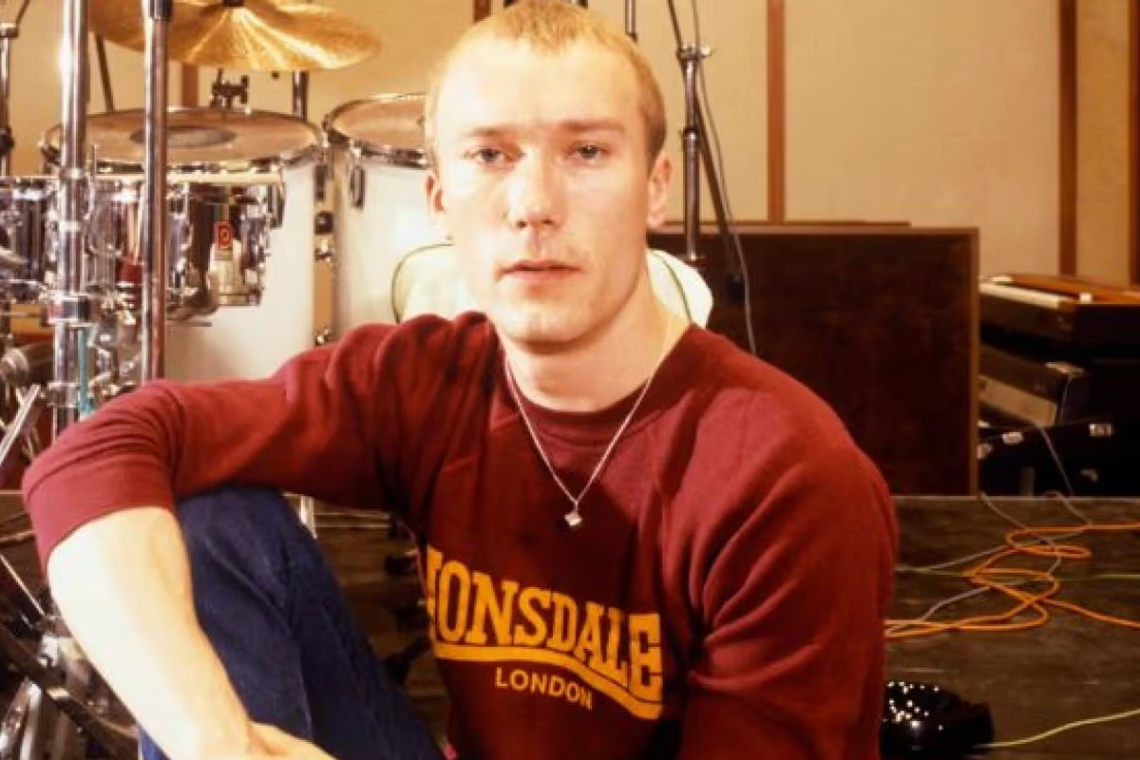
Introduction to rick buckler
When discussing the evolution of British rock music, especially the late 1970s and early 1980s, it’s impossible to ignore the contribution of Rick Buckler. Known primarily as the drummer for The Jam, Buckler played a crucial role in shaping a sound that bridged punk’s raw energy with the sophistication of mod culture. While frontman Paul Weller often grabbed the spotlight, Buckler’s precise and disciplined drumming served as the foundation upon which the band’s success was built.
Rick Buckler was not just a timekeeper; he was an architect of rhythm. His style reflected a deep understanding of song structure, dynamics, and emotional pacing. Unlike many drummers of his era who leaned heavily into chaos and aggression, Buckler maintained a refined control that complemented The Jam’s lyrical and musical ambitions.
This article takes a deep dive into Rick Buckler’s life, career, and enduring influence. From his early beginnings to his post-Jam ventures, we’ll explore what makes him one of the most respected yet underrated drummers in British music history.
Early Life and Musical Influences
Rick Buckler was born on December 6, 1955, in Woking, a town that would later become synonymous with The Jam’s origin story. Growing up in post-war Britain, Buckler was exposed to a wide range of musical influences that would shape his future career. The cultural landscape of the 1960s, dominated by bands like The Who and Small Faces, left a lasting impression on him.
As a teenager, Buckler developed a keen interest in rhythm and percussion. He was not initially drawn to flamboyance or showmanship but rather to the mechanics of music. He admired drummers who could serve the song without overshadowing it. This philosophy would later define his approach to drumming in The Jam.
Buckler attended school with Paul Weller and Bruce Foxton, which led to the formation of a musical partnership that would change their lives. Their shared love for music and cultural identity laid the groundwork for what would become one of Britain’s most iconic bands.
The Formation of The Jam
The story of The Jam begins in the early 1970s, when Buckler, Weller, and Foxton decided to form a band that reflected their musical tastes and social perspectives. Influenced by the mod revival movement, they sought to create a sound that was both nostalgic and contemporary.
Rick Buckler’s role in the band was pivotal from the very beginning. His drumming provided a steady and reliable backbone, allowing Weller’s guitar work and Foxton’s bass lines to flourish. Unlike many punk drummers who emphasized speed over precision, Buckler focused on clarity and tightness.
The Jam quickly gained a reputation for their energetic live performances. Buckler’s ability to maintain tempo and structure under pressure made him an rick buckler indispensable part of the band. His drumming was not flashy, but it was effective—an essential quality that contributed to the band’s growing popularity.
Musical Style and Technique
Rick Buckler’s drumming style is often described as economical yet powerful. He had a unique ability to do more with less, avoiding unnecessary fills and focusing instead on groove and timing. This approach made his playing highly accessible while still being technically proficient.
One of Buckler’s defining characteristics was his use of dynamics. He understood when to hold back and when to push forward, creating a sense of tension and release within songs. This skill was particularly evident in tracks like “Going Underground” and “Town Called Malice,” where the drums play a crucial role in driving the rhythm.
Another notable aspect of Buckler’s technique was his consistency. In an era where many bands struggled with live performance reliability, Buckler was known for rick buckler his precision. His ability to replicate studio-quality drumming on stage set him apart from many of his contemporaries.
The Jam’s Rise to Fame
The late 1970s marked a turning point for The Jam. With the release of their debut album In the City, they quickly established themselves as a force to be reckoned with. Rick Buckler’s drumming was a key component of the band’s sound, providing a solid foundation for their politically charged lyrics and catchy melodies.
As the band’s popularity grew, so did their musical complexity. Albums like All Mod Cons and Sound Affects showcased a more mature and refined sound. Buckler adapted seamlessly to these changes, demonstrating his versatility as a drummer.
The Jam achieved numerous chart-topping hits and became one of the most influential bands of their time. Buckler’s contribution, though often understated, was essential to their success. His ability to maintain cohesion within the band allowed them to experiment without losing their identity.
Life Inside The Jam
Being part of a successful band comes with its own set of challenges, and Rick Buckler was no exception. The pressures of touring, recording, and maintaining public image took a toll on all members of The Jam. Despite this, Buckler remained a steady presence within the group.
His relationship with Paul Weller was particularly significant. While Weller was the creative driving force, Buckler provided the discipline needed to bring ideas to life. This dynamic created a balance that was crucial to the band’s longevity.
However, like many bands, internal tensions eventually began to surface. Creative differences and the desire for new directions led to the band’s eventual breakup in 1982. For Buckler, this marked the end of a significant chapter in his life.
The Breakup and Its Aftermath
The decision to disband The Jam came as a shock to fans and band members alike. Paul Weller’s desire to explore new musical avenues led to the formation of The Style Council, leaving Buckler and Foxton to chart their own paths.
For Rick Buckler, the breakup was both a challenge and an opportunity. After years of being part of a tightly knit unit, he had to redefine his identity as a musician. This period of transition was not easy, but it allowed him to explore new creative directions.
Buckler later joined bands like Time UK and Sharp, though none achieved the same level of success as The Jam. Nevertheless, these experiences contributed to his growth as an artist and broadened his musical horizons.
Post-Jam Career and Ventures
After his time with The Jam, Rick Buckler pursued a variety of ventures both within and outside the music industry. He briefly stepped away from the spotlight, exploring interests in production and even carpentry—a testament to his grounded personality.
In the late 2000s, Buckler returned to performing with a project called From the Jam, which featured former Jam bassist Bruce Foxton. This revival allowed fans to reconnect with the music that defined a generation, while also giving Buckler an opportunity to revisit his legacy.
Beyond performing, Buckler has also been involved in writing and documenting his experiences. His insights into the music industry provide valuable perspectives for aspiring musicians and fans alike.
Legacy and Influence
Rick Buckler’s influence extends far beyond his time with The Jam. His disciplined approach to drumming has inspired countless musicians who value precision and musicality over showmanship. In many ways, he represents a different kind of rock star—one who prioritizes substance over style.
Bands influenced by The Jam often cite Buckler’s drumming as a key element of their sound. His ability to blend punk energy with mod sophistication created a template that continues to resonate today.
Despite not always being in the spotlight, Buckler’s contributions have not gone unnoticed. Music historians and critics alike recognize his role in shaping one of Britain’s most important musical movements.
Personal Life and Character
Rick Buckler is often described as private and down-to-earth. Unlike many musicians who embrace the excesses of fame, he has maintained a relatively low profile throughout his career. This humility has endeared him to fans and colleagues alike.
His interests outside of music reflect a practical and thoughtful personality. Whether it’s woodworking or writing, Buckler approaches each endeavor with the same dedication he brought to drumming.
Family has also played an important role in his life. While he has kept much of his personal life out of the public eye, it is clear that his values extend beyond the stage and studio.
Reassessing Rick Buckler’s Importance
In retrospect, Rick Buckler’s role in The Jam deserves greater recognition. While Paul Weller’s songwriting and Bruce Foxton’s bass lines often take center stage, Buckler’s drumming was the glue that held everything together.
His ability to balance technical skill with musical sensitivity is a rare quality. In an industry that often rewards flashiness, Buckler’s understated excellence serves as a reminder that sometimes less truly is more.
As new generations discover The Jam, there is a growing appreciation for Buckler’s contributions. His work continues to inspire and influence, proving that great musicianship is timeless.
Conclusion:
Rick Buckler may not always be the first name that comes to mind when discussing rock legends, but his impact is undeniable. As the rhythmic backbone of The Jam, he played a crucial role in shaping a sound that defined an era.
His journey from a small town in Surrey to international fame is a testament to talent, discipline, and passion. Through his work, Buckler has left an indelible mark on music history—one that continues to resonate with fans and musicians alike.
In a world where louder often means better, Rick Buckler stands as a quiet reminder that true artistry lies in precision, consistency, and heart. His legacy is not just in the songs he played but in the way he played them—with purpose, integrity, and an unwavering sense of rhythm.